Understanding the Impact of Alcohol on ED: How Alcohol Affects Erectile Dysfunction
Introduction to Alcohol and ED
Erectile dysfunction (ED) is a common condition affecting millions of men worldwide. One of the significant lifestyle factors influencing ED is alcohol consumption. In this article, we’ll explore how alcohol ED correlation works, the effects of drinking on erectile function, and ways to manage or prevent ED related to alcohol use.
What is Erectile Dysfunction (ED)?
Erectile dysfunction is the inability to achieve or maintain an erection sufficient for satisfactory sexual performance. It can result from physical, psychological, or lifestyle-related factors, with alcohol consumption playing a critical role in many cases.
Symptoms of ED
- Difficulty getting an erection
- Difficulty maintaining an erection
- Reduced sexual desire
How Does Alcohol Affect ED?
Alcohol is a central nervous system depressant. While moderate alcohol intake might temporarily reduce inhibitions and increase confidence, excessive drinking negatively impacts sexual performance. Alcohol ED relationship is complex because alcohol affects the body both physically and psychologically.
Physical Effects
- Blood Flow: Alcohol dilates blood vessels initially but chronic use leads to poor circulation. Adequate blood flow to the penis is essential for erections, and impaired vascular health can cause or worsen ED.
- Nervous System: Alcohol interferes with signal transmission between the brain and the penis, affecting arousal and erection initiation.
- Hormonal Imbalance: Excessive alcohol can lower testosterone levels, a vital hormone for sexual function.
Psychological Effects
- Depression and Anxiety: Alcohol abuse contributes to mental health issues, which are closely linked to ED.
- Reduced Sensation: Alcohol dulls the central nervous system, reducing sensitivity and response to sexual stimuli.
Alcohol Limits and ED: Finding a Balance
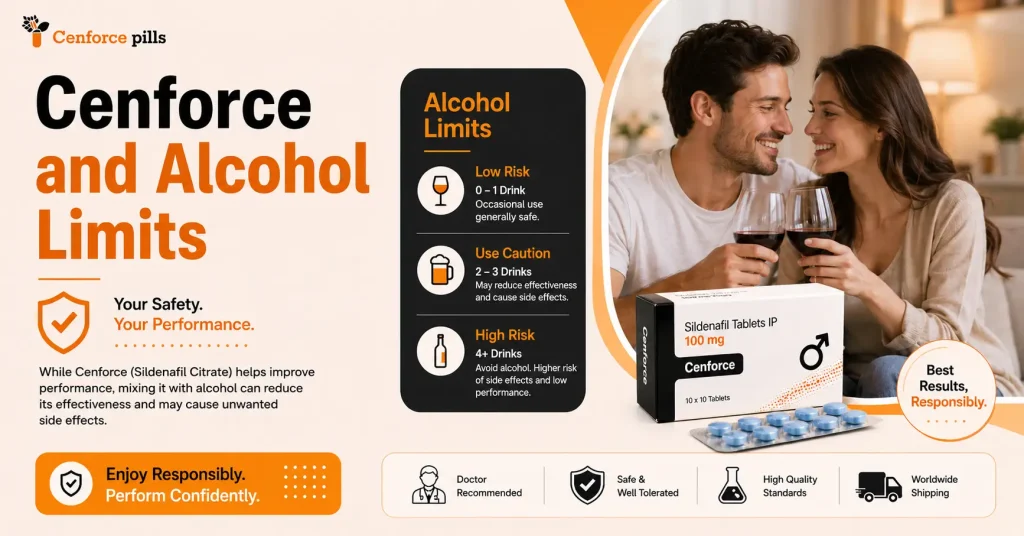
Understanding your alcohol limits is essential to minimize the risk of alcohol-induced ED. While occasional moderate drinking is unlikely to cause long-term sexual problems, excessive or chronic use increases the risk.
Recommended Alcohol Consumption Limits
- Men: No more than two standard drinks per day
- Women: No more than one standard drink per day
Exceeding these limits regularly can lead to adverse health effects, including ED.
If you experience ED and consume alcohol regularly, consider the following steps:
- Reduce or eliminate alcohol consumption: Limiting drinking can improve erectile function.
- Healthy diet and exercise: Enhances blood flow and hormonal balance.
- Consult a healthcare provider: They can help diagnose underlying issues and offer treatment options.
- Consider medication: Drugs like Cenforce can help manage ED under medical supervision but are most effective when lifestyle factors like alcohol use are addressed.
Cenforce is a medication commonly prescribed for ED, containing sildenafil citrate. It works by improving blood flow to the penis. However, its effectiveness can be compromised by alcohol consumption. Using Cenforce while drinking heavily is not recommended because alcohol can increase side effects such as dizziness, headache, and low blood pressure.
For best results, patients should follow their doctor’s advice regarding alcohol intake when using ED medication.
Tips to Maintain Sexual Health While Enjoying Alcohol
- Moderation is key: Limit alcohol consumption within recommended guidelines.
- Stay hydrated: Drink water alongside alcohol to reduce its impact.
- Avoid binge drinking: Large quantities in short periods increase ED risk.
- Regular health check-ups: Monitor overall health including cardiovascular well-being.
Conclusion
Alcohol ED connection is significant and worth understanding. While moderate drinking may not cause ED, excessive or chronic alcohol use adversely affects sexual health. By managing alcohol consumption, maintaining a healthy lifestyle, and seeking medical advice when needed, men can reduce the risk of alcohol-related ED. Remember, medications like Cenforce can aid treatment but work best when lifestyle habits support sexual health.